
We know gender isn’t a binary – that has been understood for centuries across many cultures. But what is it? Perhaps it can be understood as a field or an ocean, a made-up cultural idea, tied to feelings, life experiences, interpersonal interactions, outward body appearance, body parts, social roles and norms, sexual roles, and more.
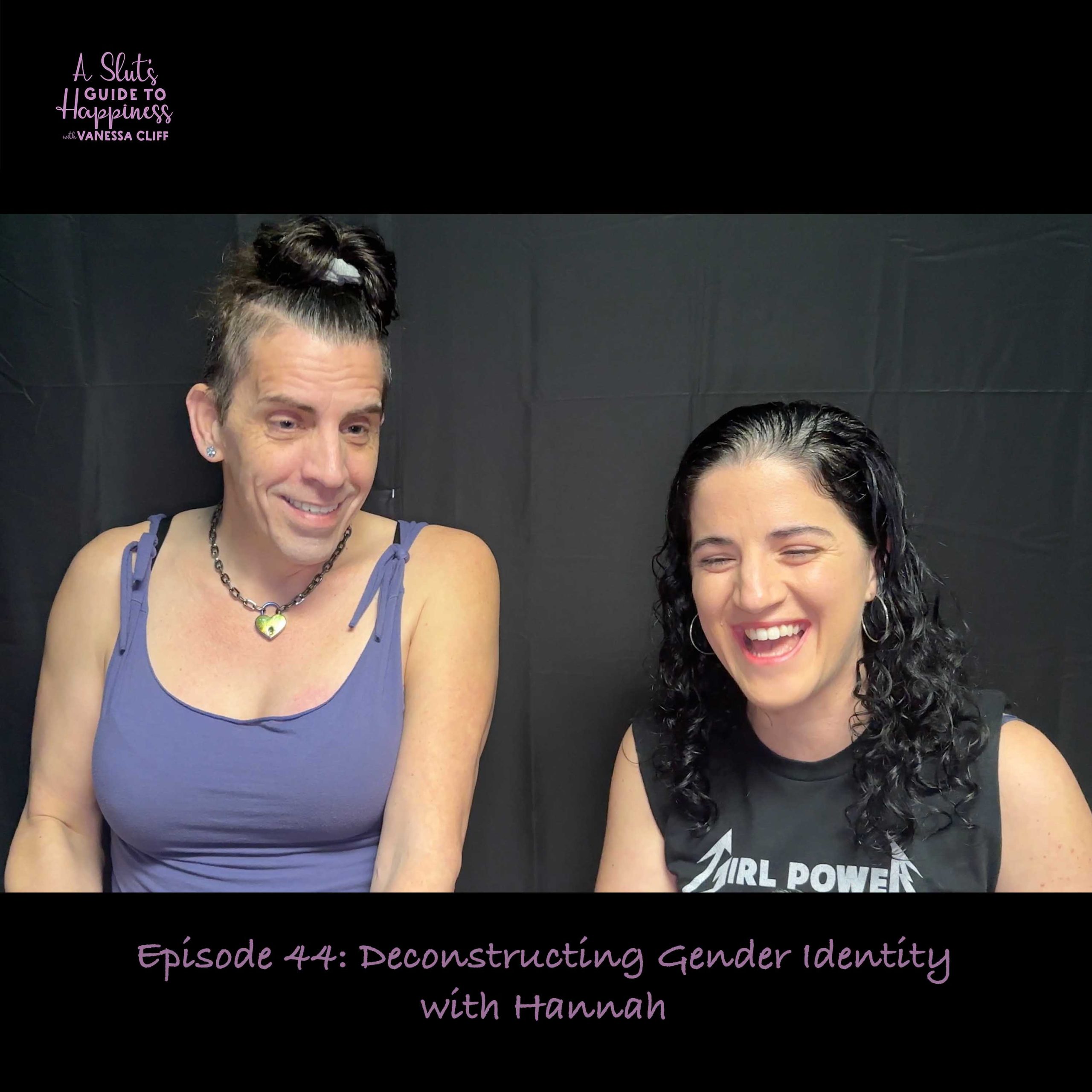
In this episode, Vanessa and Hannah, a person who lives somewhere outside the gender binary, look under the hood of gender identity. Hannah documents their personal journey with gender, self-expression and relationships. Their open, deep reflections reveal relatable inconsistencies. For example, they express apathy toward their perceived gender identity but also long for a different, more feminine body. They reject gender-based social expectations, while also desiring the kind of softer interactions that are often attached to femininity.
Even for people who recognize that gender is a made-up social construct, we are also wired for connection, so social constructs matter. Gender stereotypes, roles and expectations can and should be challenged, but these norms still loom large in collective thought. They subconsciously influence how we believe we should dress, talk, have sex, behave, or relate to others. Being honest about and dissecting the innumerable ways these assumptions show up in our lives may help us to break free of their constraints and enjoy just being.
Welcome back to A Slut’s Guide to Happiness, where your body is perfectly imperfect and it’s safe to be as sexual, kinky, queer, or slutty as you want.
Today I get to interview Hannah again, who has been on the podcast a couple of times talking about a diversity of issues and personal life experiences. Today we’re going to talk about a pretty different topic.
The other podcast in which she talked about gender, alongside Jordan, talked about the intersection of transgender people and people with disabilities, and kind of shared liberation. We were talking a lot about the external response to people who are transgender and genderqueer.
Today, I really want to dive into the internal experience, what it’s like, the process associated with gender. One of the approaches that I come to this with is the idea that not only is it, of course, hopefully quite obvious that gender is not a binary, we’ve known that for centuries across many cultures. I think of gender as more like an ocean. It’s a constellation of ideas, feelings, body parts, gender expression, cultural norms, societal rules, sexual roles and more.
If you want to go nerdy, it’s like each of those are a different vector operating on a three dimensional plane. People can fall on different spaces on each of those vectors. So it’s much more complex, far more complex than our current societal narratives allow us to explore within the confines of the man and the woman and perhaps the one extra box that we allow ourselves.
So I want to dig into that, and particularly to the extent that Hannah feels comfortable, to the emotional experiences attached to different aspects of gender.
So, Hannah, thank you for joining us.
I want to start in kind of a funky place, because I think a lot of times when people are talking about transgender or genderqueer identities, they’ll start with a question like, when did you first know? Instead I’d like to ask, if you had a magic wand or a magic button and it wasn’t a matter of seeking healthcare or going through medical procedures or logistics or finances, but you could just press that button and your body would instantly be whatever body you wanted, with the body parts, appearance and sound you want, what would that be for you?
Hannah:
I suppose that I’ve thought about this throughout my journey through gender expression. It’s an interesting question to ask because, in the beginning, when I first came out and started hormones and announced to the world, I had this image in my head about what that transition would look like, about what my goal was.
It was completely impossible, this ideal that I had locked in my head, this ideal that, as I later discovered, was still deeply rooted in a gender binary norm. I was eschewing the entire male persona, the whole thing. I was going to go as far in the other direction as I possibly could.
But what that meant, at the time, was that I would take hormones and get surgical procedures and do the things so that I could achieve a body that fit within the same bullshit beauty standards that that I was trying to buck.
Then there was actually a fairly intense sort of transformative moment. I realized that my objective has been impossible all along. What I wanted to look like, what I had in my head, this vision of what it was all going to be, I had set an impossible standard for myself, for my own internal journey.
If I were just waving a wand, I’d be 5 foot with a nice rack and I would be what socially we construe as and consider to be beautiful, in perfect shape and all of those things that personify the opposite of all of the things we’re self-conscious about.
It was a really big moment for me to look at this, recognizing I’m six feet tall and broad shouldered. No amount of estradiol is going to alter my skeleton. That’s just not how it works. I had to come to a place on that journey where I learned to embrace what I do have.
We learn this whole grass is always greener crap because it keeps us chasing. It keeps us feeling imperfect and feeling imperfect reinforces things like capitalism and sews division, which is the tour of oppression and everything else. You’re never good enough. You’re not good enough. The grass is always greener. Keep reaching, keep crossing fences. Never just be present in the moment and accept what you have.
So I have to say, as much as it almost hurts me to admit it, if I had a magic wand, I would still do the same thing. To this day, even with those realizations and with the journey towards trying to embrace what I do have, and what advantages and beauty my body does have, I would still do it.
Vanessa:
If you had a magic wand, you would still want to be 5’2” and 110 pounds and all of that. So you hold these multiple truths at the same time. That you know it’s not logistically possible for your current reality. You also know that some of that still internalized discomfort attached with who you are, what your body actually is, is societally driven. And yet, if you had that magic wand, you would still want to go toward that societal standard.
Hannah:
Yeah, that programming is powerful. It’s very powerful. There’s so much of it, especially even now with this dramatically increased exposure to media and having things just kind of thrown at you at a million miles an hour. As much as I would as I, and I think most other people, would like to believe that broadening the pool of information that’s out there would change the messaging, it doesn’t particularly, because you’re still seeking out confirmation for your biases.
The safe, squishy feeling you get, I feel like I would get by falling into a category that is socially acceptable, that is viewed as more valuable, intrinsically more valuable because you’re pretty. The internal struggle that goes on when I’m considering my gender journey and where I’ve landed, where I kind of thought that I might go, my ultimate destination and where I’ve kind of landed now. I’m starting to become more comfortable with what did not happen.
In a vacuum, a large portion of the reason why my momentum arrested was because of the reality that I was never going to be able to achieve my delusion about what was possible. It was never going to happen. I had to accept that this was as far as I was going to go. Then I started to embrace a lot of momentum and got to a much better place with it.
That programming is there and it is a really strong motivating force. That sense of safety you think lies on the other side of it is a tempting prize for sure.
Vanessa:
We’ll dive into this more. There’s one thing I’m hearing that is powerful, and I think pretty different than a normative narrative. Again, I want to highlight that, as we’ve talked about, everyone’s story is different. But I’m hearing from you that there’s kind of a bucking of this idea that people are expressing their one authentic self.
Not only have you evolved over time, but it’s also a conversation between your internal feelings and desires and the external responses and socialization that is working together. You’re constantly navigating to figure out where you’re landing.
You mentioned this a little bit and I want to know if you can dive into it a little bit more, especially for listeners who can’t see you. Can you describe, at least according to your personal perception, how you sound and look?
Hannah:
I’m tall for one thing, six feet tall or so. I have a deeper voice, which I never really toyed with the option of trying to change that or coaching that out differently. My face is very masc-presenting. In general, I feel like a very overall masc-presenting person out in the world.
I have had my top surgery and that was very feminizing and very reassuring for me and did a lot for my confidence. But in the absence of that, my body in general has most of the socially accepted earmarks of masculinity. I’m physically strong and a big person overall. I have deep set eyes and jawline. If you were to draw a caricature of the male structure, these are things that would typically be included in it.
That’s very frustrating for me because, again, grass is always greener, right? Still to this day, I struggle to view any of the things about my physical frame as totally positive. There’s always that little underpinning when I’m able to pick something up that’s super heavy and or perform a task that requires that kind of ability. In that way, I’m glad I can do that. But I still walk by mirrors without looking in them and lament that I’m kind of locked inside this big, tall, meaty frame.
I think if I was, in gender terms and social gender terms, just walking around the world, if I had to describe myself to people, probably jokingly and half not jokingly, I would tell them that my gender identity feels almost entirely internal and that you would never mistake me for anything other than a dude if you saw me in public.
Vanessa:
I think, if you don’t mind describing, you do also choose some outward appearance, through your jewelry, your clothing, your hair, and affect.
Hannah:
The clothes that I choose to wear, I wear them because I feel good wearing them. I think I look good in them and because it’s important to me to broadcast that I don’t fit with whatever you think I fit.
But I also don’t have any particular discomfort leaving the house in just jeans and a sweatshirt or a big bulky jacket. I then become invisible because I just look like another white guy walking down the sidewalk. That doesn’t really register with me.
I have a fairly casual laissez-faire attitude about the whole thing, like nothing gets to me. I think there’s a lot of denial inherent in that. I do get very twisted up and very sad about it. It’s hard to describe. I think a lot of people ask themselves the question why? Why was I born in this shape and size? Why was I born in the place that I was or the time that I was? Why it needed to be so hard.
Vanessa:
I want to ask that question that you kind of alluded to around the sadness associated with your gender presentation, and how you were assigned or identified at birth. I know that you’ve talked about that. You enjoy that you walk through the world and you’re kind of a statement or lesson or confusion to people. And, I don’t want to speak for you, but I imagine that you probably would not have undergone the magnitude of what you have undergone emotionally and socially and financially and logistically, just to be a statement to people.
So I’m interested in knowing now, going back, what were some of the driving emotional factors that led to you feeling like not only was this a thing that you were experiencing, but also you’re experiencing it enough to want to go through those challenges?
Hannah:
Again, as you stated before, it’s so important, especially in conversations like these, that everyone understands that these journeys are personal and the reasons that people give and the emotions and thought processes that went on, are in no way reflective of anything bigger than just what’s happening inside.
There were a few factors going on at the time. I’d always had that same sort of feeling from a young age, and in a sense, it didn’t quite fit. I just didn’t have words for it. No cultural exposure. So there was just no way for me to know what was going on until I knew. And as soon as I knew, it was like “Aha!”
One of the other things going on is that, yeah, a lot of the motivation was like, sure, why not? That would be cool. I’ll do that. To just be different. I enjoy challenging the world by merit of my existence alone. I think it’s fun. And I like watching repressive to cishet dudes kind of melt as they try to figure it out. Or falling on their swords because they think they messed up gender pronouns.
But on a deeper level, there was a big emotional component to it because, for one thing, at the time, when I finally did come out, I was in an enormously emotionally abusive relationship with somebody. A protracted, emotionally abusive relationship. I needed to escape into something. I needed to find a way to put down who I was, who I was trying to be.
Experiencing so much sadness and so much anger about this role that I had been put in, and that didn’t fit, and I wasn’t happy, and nothing seemed to be going the way I thought it was going to go. My perception was that more feminine people in our world received more compassion. More patience, more consideration, more slowness, more feeling.
I think that last part is the most important one, because, being acculturated male, there’s a lack of emotional availability that’s reinforced. Regardless of anybody’s gender presentation, their emotional capacity and needs are the same. We’re all emotional critters. We need that.
But as a male at the time, I was supposed to not need that. There isn’t softness and there isn’t forgiveness and there isn’t room for you to fail. There isn’t room for you to be soft or be weak or any of those things. It’s just this constant, endless need to lock your knees and hold back the wind.
I just wanted softness. I wanted to feel small for a while because I’m very seldom looked at that way. People in my life, even people that I’m directly connected with or people that I have personal relationships with in my life, don’t see me as small. They see me as the big one.
So when it comes to physical touch and or emotional exchanges, there’s still this sort of implicit, unspoken expectation that I will fill the role of the stoic. I will hold my shit together and won’t be overly emotional.
There was something so attractive about the idea that if I become feminine enough, maybe I can get that. Maybe I can get some softness from life.
Now again, being feminine has nothing to do with it. It’s just another element to that kind of programming that we all go through, that I was just sort of blindly following. I assumed that if people saw me as feminine and therefore by societal standards or whatever as weak, that they would take care of me like I was, not expect the things that they expected. I hoped there wouldn’t be so much pressure on me to perform and go and do and hustle.
That was so hard for me to make peace with in my mind. That persists even to this day, where I battle between those two things, those two extremes, the “don’t be emotional” extreme: hold your shit together, hold it in, push it down, don’t spoil anybody else’s peace with your problems.
And then that constant, almost child-like reaching for softness and understanding and a place where I can bury my head and hide for a while and be vulnerable and have that feel good and not like a violation of the other side of that stoicism I supposed to have where vulnerability feels uncomfortable because I’m acting against this big pressure over here, in order to embrace this pressure over here.
Then, strangely enough, I went through the beginning portions of a good portion of this gender transition journey. And I ended up sort of stopping right in the middle, right between those two things. Refusing to commit to either of them, which is interesting in and of itself.
Vanessa:
I imagine there’s lots of different reasons and parts of the story about why you explored a different gender identity, why you have pursued a different gender identity than you were assigned at birth, but one of them that I’m hearing is this desire to have more of the experience that particularly cisgender women are allowed in this society.
On a personal level, I really hope that, especially through processes of undoing norms of masculinity that the expectations of stoicism can be undone for everyone. For example, the feminist movement has talked a lot about the value of rejecting norms for men too. Cis men can cry and be held and be loved softly and gently. I wonder to what extent that is perhaps a universal desire that we may wish for everyone.
Then there’s also your desire to match what you felt inside, what you wanted and how you wanted to interact with people. You’re saying that you ended in the middle. I know, in some part, that’s ending in the middle in terms of how you chose to identify yourself and the extent to which you changed your body. And I’m wondering if, when you’re saying that you also are referring to, being in the middle on that emotional spectrum, being the person who has to hold their shit together versus being the person that is soft and able to fall apart and be held. To what extent is that a permission-giving from yourself versus socialization versus gender?
Hannah:
It’s important to note that that stop in the middle was a choice that was made in good spirits. It wasn’t a resignation, particularly, the acceptance that I wasn’t going to be able to achieve some feminine ideal through surgery and hormones. It was just reaching this certain spot and then saying, wait a minute here. This is pretty good. I like right here, my gender expression right now.
Part of the reason why I am where I am with it is that it feels good. It’s fun. It’s fun straddling fences. It’s fun being in a place where you can’t be defined. And the total ambiguity of how I identify is like just the whole gender-destroying bog creature thing. I don’t want to be associated with any of the genders. Because I think that labels and things like that are inherently limiting.
I’m trying to condition and train myself to not behave in accordance with what’s written on the instruction list for this category or that category. I get to just sort of select when you’re talking about anything that’s cultural like that.
Gender isn’t a thing. It’s not real. We made it up because we do have this deep, belligerent desire as a species to put people into categories and to slot them. That’s just another way that we do that. And I don’t like any of those. I think they’re all limiting.
But right now, one of my biggest issues is that the still the acculturated male part of how I was informed growing up and through my teens and 20s and even through my 30s is winning right now. It’s frustrating because the whole reason why I attempted to and I’m continuing to attempt to disembark from that place is to get away from that. But there’s safety in it because it’s what I know.
There’s safety in it because or at least the perception of safety anyway. Because for all of us anxiety junkies out there, vulnerability leads to unpredictability, and unpredictability feels unsafe. And so when I am vulnerable with somebody, or I expose some truth, I expose the possibility for that person to find or take issue with whatever I’ve talked about, whatever my position or my opinion is.
Maybe it’s going to be like, now they don’t like me, and now I have to deal with that. Or there’s going to be emotional fallout from my vulnerability that I’m going to pay for, because that’s my experience in interpersonal relationships.
00:29:45:16 – 00:30:20:21
Unknown
As much as I wish and want to find places where I can be small, I’m not. I’m not small. The places where I can be vulnerable, I don’t know what that looks like. I don’t even know if I would be able to say, oh, here it is. Here’s vulnerability. Here’s what that feels like.
Then to be able to identify at the same time that it was a place I wanted to be, because it’s terrifying. Men, in general in the way that they’re brought up, are told not to use words like afraid and fear and terrified because it’s weak, that’s “sissy stuff”.
I still have the bad habit of reducing what is essentially just fear, because that’s what motivates almost all of my, and most other people’s, maladaptive defense mechanisms. Fear is the root cause. To admit that vulnerability is terrifying. It’s terrifying because it opens me up for being judged.
It opens me up for being considered, judged, even known. Because being known creates space for other people to hurt you. It’s odd and it’s still something that I grapple with that I began this journey with a component of it being that I wanted to become something and someone where I could be soft and vulnerable and small.
Then I got to a certain point in my journey and now I’m at the precipice of that. I have good people in my life who I have every reason to believe would take care of that, and allow me the space to do that. I’ll be goddamned if it’s still just hanging on the edge. Our lessons are really, really hard to unlearn. But I have some confidence. Some of the people in my life are very persistent.
Vanessa:
It’s interesting that you talk about vulnerability as a source of terror. I do think that discomfort is profoundly helpful in allowing us to grow.
And I also think of vulnerability as a space of power. If you are confident enough in yourself to allow yourself one part of your emotional landscape to be vulnerable, it allows space for other people to be vulnerable too. You can both be a little broken and still be lovable. I think that’s an example of where societies that are more matriarchal tend to value vulnerability and care perhaps more than this very patriarchal US society does.
I do want to dig in more again, like the way that gender is a social construct. As you mentioned, gender is tied up in so many different things that get conflated.
For example, you’ve used the word “small” and I know that in context you’re talking there about emotional “smallness”, like being allowed to be vulnerable. But you also expressed that you want to be physically small, like not six feet tall. I’m wondering to what extent your outward gender expression and the way that you are perceived in your gender impacts your permission-giving of yourself, allowing yourself to be emotionally small and vulnerable?
Hannah:
Well, I feel called out and that’s not in a bad way at all. I’m just in here talking and fell headfirst into a trap too, because, and my primary reference when I use the word small is to be physically small. And that’s and that’s not accurate. Associating the feminine with the small, it’s another element of that sort of programming that we get that, that people of all genders are all different sizes.
So this idea of being physically small equates to feminine, it’s interesting because as you were talking about it, I was like, oh shit, that’s right. That’s not true at all. So it’s just another thing that I have to catch myself with.
You mentioned how you view vulnerability and what we’re taught growing up now in societies like the United States. The narrative is that vulnerability is unnecessary for survival, so there’s no point. That’s hard to break. It’s like I don’t need vulnerability to motor forward and I don’t need vulnerability to throw spears at mastodons. I don’t need vulnerability to work 75 hours a week. I just got to knuckle down and get it done.
In regards to your question about the permissions, we do talk about an incredibly difficult lesson to learn. What does it look like to give yourself permission to do a thing, anything for that matter? What would it look like for me to give myself permission?
Because quite by contrast, when I talk about small, I’m talking about physically small. When I’m talking about emotions, I want to be able to be much bigger. Take up more space. More room.
When I looked at what I knew about how various genders were viewed within our culture, I saw that women – at the time, because my knowledge base was very low – I saw it was just women were allowed to take up as much space as they wanted with their emotions.
Not only were they allowed to do that, that it was expected for them to do that. It wasn’t viewed particularly positively in a patriarchal society. They’re just hysterical or whatever. Women, they’re just all emotions all the time.
But I was living in a body in a form, in a shape and in a brain and and in a training construct that told me that I couldn’t be emotionally big at all. Except for anger. Rage. You can break shit and scream and all that, all that you want. Because that’s a sign of strength and virility in the animal kingdom.
That’s one of a million emotions. You’re not allowed to show the other 900,000 emotions. So seeking out physical smallness, I suppose, because I didn’t want the expectations that came along with being physically imposing. And also because of equating being physically small and feminine. I would look more like I wanted to look like.
As far as emotions are concerned though, this is about giving myself permission to be emotionally big, to not weep quietly around the corner in the dark where nobody can see me. But to do that with the power that I need to, to actually get this emotion out of my system.
One of the other traps that I personally fall into is that when I think about being emotionally big, I think about being emotionally big in regards to what would be construed as negative emotions crying, grief, frustration, all of these things sadness. But that also includes fucking joy and and and happiness and rapture and these incredibly positive emotions that go with that, that you really can’t have unless you also allow space for the downs.
It’s about giving yourself permission to have a much wider variance in the sine wave of your emotions and being willing to accept that trade off.
I viewed gender transition as a way to achieve that without really considering that it’s not enough to take hormones and change your body physically. It’s not going to get you there. It’s like thinking that moving to another city is going to solve all your problems. You bring your problems with you.
So as I established myself outside of this gender binary, and I did so for reasons that meant a lot to me, but also understanding that this was not going to fix what I was looking to fix. The only thing that’s going to do that is to allow the trust and the space and the discomfort to be there, allow the unpredictability to be there and realize that I’m not going to die.
So yeah, this is about giving myself permission to be emotionally big.
Vanessa:
I appreciate that clarification.
So one of your goals in transitioning was to support being able to have this sharing of your emotions and vulnerability. You were seeking a representation of how you felt inside and what you desired. Society does respond to how we look and it changes the way that people interact with us, that that also can, conversely, have an impact on how you relate to other people and think about yourself.
As you started choosing to dress more feminine and got big boobs and were no longer perceived as masculine, in what ways did that change how you thought about yourself or how you related to other people?
Hannah:
One of the really important components that I can’t believe I didn’t mention before was that a huge portion of me wanting to alter my body and change my physical appearance and change my gender presentation in general, was to make myself what I believe to be more sexually desirable. Another big lie that is constantly perpetuated is that feminine people are the gatekeepers of sexual desire. And masculine people pursue that. They’re all just clambering down beneath the balcony waiting for somebody to throw a vagina at them.
So because of my lack of emotional education and nurturing growing up, like everybody else, I’m just seeking connection. I just want to connect with people. One of the ways that I knew that I could do that, that felt good, that felt strong enough, that it was able to break through those weird barriers that I had been programmed with was through sex and intimacy. I wanted to fuck everybody, because I wanted to know them and I wanted to connect with them.
I saw presenting as more feminine as a much more advantageous route to achieve that end. If, if the world at large in general found me more sexually desirable, I would then have more opportunities to connect with other people.
That continues to this day to be a huge motivating factor. I’ve struggled with eating disorders and you name it just trying to ensure that, if nothing else, I need to be cosmetically attractive to the world at large in a feminine-presenting way because that desirability and the attention I got for that desirability fed me. I wanted to be validated. I want to be important. I wanted to be seen as an object of desire. And if that did that, then so be it.
How it changed how I engage with other people, so far, not as much as I hoped. My personality and my overall expression of myself to the world has remained fairly static for the last 25, 30 years or so. And that’s fine, because I really didn’t have any intention of changing my personality. I was always fine with my personality.
But as far as how I engage with others, I have learned to be softer. When it came to other people as an extension or expression of this. I’m more feminine and more nurturing now.
One thing that did happen as a result of my transition, which was an almost immediate and priceless payout, was that the anger went away. My constant simmering outrage that I walked around all day vaporized almost immediately.
Vanessa:
I could imagine a medical professional identifying testosterone as the core cause. And perhaps that’s some piece of it. What other kinds of cultural, social, or emotional things were going on?
Hannah:
It wasn’t testosterone because I didn’t start blockers until almost a year after I started yesterday.
Imagine making a fist and holding it for 30 years. How much agony would your arms be in after all of that time? And then finally, after those 30 years, just letting your hands relax. That’s what it felt like. You’re holding on so desperately.
I was holding on trying to cram myself into this little space. This is what men do. Be a diamond. Do this. Don’t cry. Don’t tell people that you’re hurting. Don’t tell anybody at work until you drop. Thousand yard stare. Challenge everybody to a fight. All that kind of horseshit that never fit. I was always so angry, and right under the surface is this tissue thin veneer of civility that would cover it all the time. That was my norm.
Then I came to work in different clothes and I came to work with my mascara on and those expectations were gone. Because now nobody could look at me, even if I did get raised eyebrows or snickers from around corners, they didn’t see me as a man anymore.
I was able to take all of that shit, that whole big sloppy tar ball that just sat in my chest all the time, and finally, thank God, put that shit down. I could just follow my path and what I believe my intrinsic personality to be and be consistent with that.
It made me better. It made me better at boundary setting. It made me better at keeping my word. It made me better at helping other people.
I still struggle with connecting on deep emotional levels, and mostly just because I never learned how to recognize them. I never learned how to do that. But that big payoff right off the bat was the anger. The anger went away almost immediately.
So the anger went away and then the confidence, for me, anyway, just went right up. I went from hanging my head, slumping through my days because I just felt so beaten down, tired, angry and frustrated with circumstances to to chin up, parading through everywhere that I go, to who I am now, which is just I just walk around the world like I’ve got a forcefield around me everywhere I go.
For the most part, it’s not a forcefield of any kind of denial. It’s a forcefield of just me. That’s it. There’s no arguing with that. Nobody can say anything of any relevance about the fact that I’m just me. It’s not something you get to argue with.
My gender transition, especially in the very beginning, had some profound impacts on how I engage with life, how I engage with the world. The abusive relationship that I was in didn’t last. It lasted less than a year after I came out.
Vanessa:
Which was not because of that person’s response to you?
Hannah:
No, it had nothing to do with that. It had to do with me growing up and realizing I didn’t have to do any of those things that I was doing that had kept me locked in this place. Experimenting with my gender presentation was a way for me to grow and learn strong things about myself and set those kinds of boundaries.
All that stuff I was doing before was nonsense, and I didn’t like any of it. I was able to say, I’m not going to do that anymore. Over the course of the next year, it was just like all of those little behaviors started falling away. The holes in the armor of my abuser became more and more apparent as I stopped playing the game. I started watching them fall apart because the control started to erode.
The gender journey has been a complicated one for sure.
Vanessa:
I want to ask further about this idea of sex, sexual desire, sexual objectification. One thing that we say at Cliff Media is that women and queer people have their own sexual desires and can pursue them.
I certainly relate to the idea of wanting to be slutty and objectified. And I know that sex is both wanting to orgasm and feel physical sensations, and it’s connected to a whole myriad of ways that people connect with or get response from, or love from or power from or with other people.
There are so many things that Maya Angelou has said that are brilliant. One quote that I love from one of her poems is “walking like there are diamonds between my legs”.
She’s referring to her sexual desirability as connected to her confidence and her pride. I feel like you alluded to that.
I’m wondering if you can draw out, to what extent was your interest in being desired related to sex, just for its own sake, for the banging, and to what extent was it related to your desire for belonging and love and connection and empathy and vulnerability?
Hannah:
Oh, I would say for me personally, if I had to put a ratio on it, it was 5 to 95, where 95% was about validation and love and connection and all of that stuff. Sex is all right. I struggle with a little bit of autism and stuff too. The sensory issues associated with it, smells and tastes. Snd sex makes you wet.
It’s fun. But honestly, the only two main pursuits for me when it comes to sexual desirability are professional, which is pretty self-explanatory, and then, and this took me a good portion of my lifetime to really understand that this is what was going on, was that I was looking to connect and be validated.
I was looking to experience the desire, not the physical pleasure of having my body touched or whatever, which I love, touch, that’s very validating in and of itself. But the kind of, “According to Hoyle”, sexual things, touch my junk and climax and all of that stuff, honestly, has never been important to me. I want to connect to people. I want to know them through that touch and through that expression.
Through the inherent vulnerability of sexual contact, your brain is completely flooded with all of these amazing chemicals and hormones that open you up. It has been a way that I felt like I could connect meaningfully with other people.
I had a habit throughout most of my life of jumping to that really quickly when I would meet somebody that I was interested in. It’s beautiful and incredible. My desire is just as strong as anybody else’s. But my desire, the motivation behind my desire is, is a lot less physical pleasure than it is emotional pressure.
Vanessa:
I didn’t realize that we would be going down this conversation about sexual roles but I’m realizing the way that, particularly for you and probably for a lot of people, that it is tied up with gender. Of course, sexual orientation and gender are different things, but they’re also related culturally and socially.
It makes me think of a book I was recently reading by Dr. Alexandra Solomon, who is a sex therapist. She was talking about a thing men need to understand more about women, in reference to traditional heterosexual couples.
Of course this is a lot of oversimplification. But she was making a distinction between intrinsic and responsive sexual desire. She suggests that men men are more likely to experience intrinsic desire, an innate desire to fuck. By contrast, women are more likely to experience responsive desire. When they’re feeling heard or emotionally connected, then they will be more responsive and open to or want sex.
So there are a lot of gender norms attached to sexual desire.
I’m wondering how this plays out for you, the connection between gender assumptions and your responsive sexual desire, that desire for emotional connection, which has been culturally attached to femininity?
Hannah:
The corollaries between what we come to accept, because that’s what’s been kind of thrust at us is that the male in our culture pursues sex and sexuality for the physical pleasure of it, and to propagate the species. Whereas for the feminine, it’s about the emotional connection. So it’s entirely possible, though I have not really particularly reflected on that.
That was another component of that motivation, or at least an extension of the desire to have permission, socially, to be emotionally big. It’s also to be able to put down the yoke of performative expectation and things when it comes to sex and sexuality.
For the longest time, throughout most of my life, it’s been such a critical component. It’s always in the forefront. My desire was omnipresent, and I knew this was always going to be a particularly big factor in my life. One of the things that I don’t like is the almost theatrical, performative nature of it. For male-presenting people, there’s a ton of performative pressure.
There is a competitiveness. There’s a competition that is put in front of us. If you are male, you are taught to believe you’re competing with all of the other males to get yourself a woman. They’re over here, holding sex as a prize. And if you do all the right things, you might get one of those prizes.
But it doesn’t stop there. Because if you are unable to perform as we are told that we’re supposed to perform, which means consistent diamond hard erections. If she doesn’t have 790 orgasms, and peel the paint off of the walls, then you failed. And if you’re incapable of doing that every single time, then you’re less masculine.
So that competitiveness creates this unbelievable performance pressure. We have $1 billion pharmaceutical industry developed specifically to support that bullshit notion that a raging boner is what makes you manly.
I spent decades pursuing sexuality because all I wanted from it was this emotional connection, to feel somebody’s warmth close to me.
Vanessa:
When you say it makes you “manly”, you mean it makes men sexually desirable for the purpose of continuing the relationship or the sexual connection?
Hannah:
Right. And even directly tied to how you should feel about your own manliness internally. It’s such a small external thing. But it’s sold to men that your ability to do this thing is tied to the deepest possible sense of your self-confidence, your strength, your virility, your manliness, your ability to do all of the manly things. Ultimately, it boils down to, can you keep your dick up? Can you be a rockstar in bed?
That was my lesson. For decades, all of the sex that I had with anybody, it didn’t matter. Even if I was in a loving, committed relationship with them, all of the sex that I had with anybody felt incredibly performative.
The actual physical nature of it had nothing to do with what I thought felt good or anything like that. It was all about that singular focus on trying to make sure that I didn’t leave any room for there to be residual sexual desire that I didn’t satisfy.
It was also heteronormative monogamy. So if you leave a space, a gap, then insecurities start to develop. What if somebody is better than me at this, then they’re going to go and they’re going to find that.
I wanted to be able to put that down too and just enjoy touching people. That’s another permission that I felt like when I began my gender journey that the feminine had to just be the center of that attention or to not have this performative element.
It’s very important to know, too, that culturally, I grew up male presenting, with male expectations, so almost everything that I believed that I would get out of this gender journey are all total supposition. I had no frame of reference. I didn’t know what it was like to be feminine in America.
I still don’t. I have no perspective on what it means to be five foot two and 100 pounds. Like all of the pains in the ass that come along with that, that that it’s not all fun and fucking games.
But nevertheless, the lure of those things that I thought that I perceived went along with it because honestly, even if my only frame of reference was, if this is this way for me, the opposite must be true.
Vanessa:
It’s interesting that you weren’t caring about your personal pleasure and desires and just the enjoyment of touch. You were caring about the performance to try to please your partner, which for the normative cis man means getting your dick up.
By corollary, Erica Lust talks about how mainstream porn is teaching women that their pleasure doesn’t matter, that their job is to suck dick really well and get their partner off and make their partner cum, and so on.
For both sides, the cultural norms attached to sexual performance based on gender, are the people who are denying themselves pleasure.
So one of the additional pieces that I want to ask is, as you’re undoing this idea that you have to perform sex as rather than enjoy sex, why did you decide not to get bottom surgery to entirely eliminate the factor of needing to keep it up?
Hannah:
Well, I think the big motivator, aside from just looking at the way that my body was constructed at a certain point along my journey and saying, yeah, I can stop there, was that I retained my penis because, at the time, especially having the functionality to be sexual with people was critical to me. It was still the only avenue that I knew to make deep connections with people.
I wanted to ensure that regardless of who it was and regardless of what they desired, I had the materials to accomplish that. It was like I have everything you could want all in one package. So no matter who you are, I can be sexually desirable to you.
That feeds me because in that very superficial way, knowing that somebody has that desire for me makes me feel good about myself.
Vanessa:
When you’re saying that you have everything in one package, my understanding of what you’re saying there is that you have boobs, a dick and you can be penetrated. Those body parts are there, which is still based on the assumption of sex as performance, sex as orgasm, success, as opposed to emotional interactions that people can desire.
Hannah:
Oh yeah. And that’s true still even to this day. I came out very quickly like it was just there was no fucking around. There was just less than 24 hours and I changed my entire life.
But that was all what I considered to be the easy stuff. I’m still years later, in the process of trying to get rid of the insecurity that comes from not being able to perform in the way that I have been told I’m supposed to. I’m still working at trying to allow sex and intimacy to be a much more emotional experience than a physical one, to abandon the idea that climaxes are the end all, be all.
But that again all comes with permission to be emotionally big. We keep returning to that theme that I think the biggest component, even now, continuing to this day of my gender journey, was the permission to be emotionally big. Because of how repressive it is to be male.
It’s not that men can’t emote or ask for help or cry or be emotionally vulnerable. It’s just they’re not allowed to. I don’t think that enough attention is paid and that enough forgiveness is given to that reality, how powerful “not allowed to” is, especially for a barely evolved creature, like a human being struggling with awareness and this deep need to belong. “Not allowed” is an enormously powerful thing.
Vanessa:
Which is absolutely socialization, acculturation. And it’s not to say that it’s easy to get free of this, but certainly there’s some power and freedom and happiness that comes from it.
Hannah:
It takes community to get free of that. It’s so hard, it’s impossible to do it by yourself. Finding other people and then allowing little baby steps to experience or explore vulnerability.
Then you realize that your world doesn’t come crashing down and letting it feel good, even when it’s a sad emotion and understanding, wow, this is so much more dynamic an experience than I was allowed to have before.
It takes other people to do that, which is also a lesson that I was hoping, and now to a certain extent am experiencing, but it was also another lesson that I was hoping that that gender transition would help me learn.
Rugged individualism, the American ideal, is so steeped in machismo and patriarchy. This image of the cowboy smoking the Marlboro alone on the range. Meanwhile, all the womenfolk are gathered together on the homestead, socializing and laughing and being friends and having connections and having community.
I was so fucking tired of being alone all the time. I wanted to not be alone. I felt like that was impossible, that I couldn’t maintain the male ideal and not be alone, even with my friends. There’s a distance.
Vanessa:
It makes me think of the idea that it’s a lot easier to be bisexual as a woman than as a man in this society. Like you walk in swinger’s club, and you kind of expect that all the women are going to kiss each other. But it’s considered taboo for men to kiss.
You’ve been talking about the different ways that gender and your transition are also related to this desire for vulnerability and connection and sexual desirability.
None of these things are tied to your outward presentation. And yet, here we are in this year, you’ve decided now to do FFS, facial feminization surgery. So, especially as you’ve gone through this process over the last 7 or 8 years of transition, both in your social and your physical identity, what is it now that you’re hoping to achieve from FFS? Not just in terms of your appearance, although perhaps that, but also in terms of what it means for you internally and emotionally?
Hannah:
Well, I mean, I’m hoping that I’ll like my face.
Vanessa:
You don’t like your face because it’s masculine. But let’s go deeper. Why don’t you like that it looks masc?
Hannah:
It’s a duel between outward presentation and internal perception. I feel dramatically more feminine than my body will allow me to present outwardly, than my voice can effectively broadcast. If I’m wearing a bulky jacket and sweatpants, people are going to take one look at me and make assumptions.
So there’s a couple of elements at play there. The first and most superficial one is I want to have a face because I can, and it’s my face and I’ll do whatever the fuck I want with it. But on a deeper emotional level, exploring that now, maybe even for the first time, thinking about it right now, I’m still tied up with this idea that I can somehow achieve beauty. Maybe part of it is that I can escape myself if I look like somebody completely different, then I could be somebody completely different.
Vanessa:
When you say, achieve beauty, I assume you mean normative beauty.
Hannah:
Yeah.
Vanessa:
To what end?
Hannah:
Just the confidence, I suppose that I can. Well, I don’t know. I think all I can do is assume that normative, beautiful people walk around the world knowing it.
Also because of the desirability that goes with it, because I’m still deeply connected to this idea that sexual desirability equates to value. If I am sexually desirable, then I have purpose and value that will continue in so long as I maintain that desirability. Beautiful femininity is held up as the benchmark of sexual desirability in our culture anyway. So the closer I can get to that, I’ll feel safer because I’ll have something that is valuable.
Lots of self-worth is tangled up in that, what intrinsically brings you value and what others value you for. I have no issue with objectification because it’s attention and that attention is value. Even if that value lasts for however long it takes somebody to wank, it’s still value. So yeah, FFS is a big part of that.
But I worry too that we go through the whole process and it’s not going to make a difference. It’s not going to change anything. But I’ll heal from it. The surgery is not problematic. I don’t care about that. Yeah, just to be pretty. And the confidence that goes with that in the sense of value that goes with being pretty.
Woah, I got a long way to go.
Vanessa:
That sounds like a long way to go in self-worth.
Hannah:
Well, with cultural programming. We like to believe we’re a lot more awake than we are, especially internally. We may be outwardly, loudly or virtue signaling or whatever aside, but how we actually feel inside and what we succumb to inside, it’s different. It’s kind of a mind job. Like, I’ve made some progress, right?
Vanessa:
Yeah, I deeply relate to that. I strongly oppose fatphobia. And sometimes I will still watch what I eat in order to try to stay thin. Why? Because of bullshit cultural programming, for sure.
I have two more questions. Okay.
The first is related to your choices of how you adorn yourself. And there’s so many. Again, like different aspects of gender that it’s not it’s not this binary, but it’s it’s like choices.
So for example, when I was a little girl, I would always sit slouched and with my legs spread, just taking up physical space. I had to wear dresses to church. So I was always told both by my mom and other people sitting next to me at church, “Cross your legs like a little lady.” I did not want to be a little lady. And being told that I had to keep myself together in order to be a girl made me not want to be a girl.
Today I think that one of the things that I enjoy about hoop earrings specifically is to be like, I’m a slutty little girl and so I can wear the dresses and look cute and have the big earrings. And I can also choose to keep my legs open if I want. So it’s a defiant gender expression.
Whether consciously or subconsciously, a lot can go into people’s choices about their dress or their jewelry or makeup. I know that you put cloths in front of your dick when you’re wearing tight pants. You make different choices about your hair. What motivates those? And if you can give a couple of specific examples among those about what they mean to you.
Hannah:
Choices that I make for outward expression are the same thing. I have what I consider to be a nice body. I wear clothes that accentuate it because it makes me feel more desirable. I paid a lot of money for these ridiculously awesome tits, and I want to wear shirts that show them off, all the time, even when it’s not weather appropriate.
So I like various aspects of my body well enough, but only because I perceive my body to be fit, which is another element of being conditioned to believe that one thing equals another thing when that’s not the case. That my body is inherently attractive because I’m fit.
I don’t wear makeup because I don’t like my face, so why would I bother to prepare people to look at it? Why would I put paint on a hog? So I don’t bother with that. I’d be willing to wager, pretty solid cash that when I’m able to go through with FFS and that all heels up, I bet you I start wearing makeup, if I approve of the results.
I adorn and accentuate the things I have confidence in, like anybody does I suppose.
Originally I had every intention of being just bombastically feminine with everything that I wore. I came out and I threw away all of my masculine clothes, all of my slacks and button downs. All of it went to Goodwill.
I replaced my entire wardrobe the day after I came out but it lost out to laziness and practicality, and cheapness. I don’t want to go buy a bunch of new shoes because I’m a cheapskate and I don’t want to spend the money. And then practicality, I’m a rough and tumble person, and I work hard with my hands, and I do a lot of things during the day.
But I always feel better, and I can’t explain why I feel better, but I always feel better when I put on a dress. Lately I’ve been running up against the internal struggle with, if my objective is now to kind of upend this binary gender system that they’re desperately trying to slam us into, why am I abandoning one pull of that gender binary for the other?
Am I really saying anything if I get rid of my suit and tie and I wear the sundress and put flowers in my hair? Because I’ve crossed over all of this intervening space to just arrive back in the binary. But it feels good to at the same time. So it’s a real battle.
Vanessa:
You are also allowed to just enjoy things and do things because they feel good.
Hannah:
I know, I know, but Overthinker’s Anonymous, right? We can’t just let ourselves enjoy things. There’s a deeper issue or meaning behind it all.
Vanessa:
Okay, last question. This is a little bit tied to what you just mentioned, alluded to a bit around going from one extreme to the other. I want to acknowledge that in the same way that there’s not some kind of value to sticking exclusively with gender binaries, I also don’t think that there’s a value to entirely eschewing gender binaries.
There’s nothing inherently wrong about a position on the gender binary. I love identifying as a woman and the self-determination in that choice is super important to me.
Someone doesn’t have to wait until they have top surgery and facial feminization surgery and a different voice tone and however other people perceive them for them to decide, okay, I want to be a woman or simply, I am a woman. Someone can do that at any point, because we get to define ourselves.
I’m wondering if beyond the kind of middle finger that you want to give to normativity and gender definitions, is it imposter syndrome that makes you not identify as a woman, or is it some characteristics of masculinity that you still value that makes you not want to identify as a woman? Or are there other factors at play?
Hannah:
There are a lot of things connected to the answer to that question. So imposter syndrome is a huge issue. It’s a driving force behind a lot of the things that motivate my behaviors and the choices that I’ve made.
Almost all imposter syndrome is fed by social narratives, what we have been taught. There are elements of normative masculinity that I do like. The jury is still out on whether or not I only like them because they’re safe, because it’s what I know. I have no experience to be able to say whether or not I would like something else in that regard.
Because I’m scared to deviate from that, like conversations that we’ve had about not taking up emotional space. Because that imposter syndrome creeps in. I’m sure that the person sitting in this room with me has emotional struggles that are harder than mine. So if I voice my emotional struggles, I’m trying to lump mine in with theirs. I don’t feel like I have that place.
My physical presentation is the biggest motivator, I suppose, for why there’s some imposter issues with taking up space as a woman and saying, I am a woman.
In part, truth be told, that I’m not. So, it used to be something that I was moving towards. And what I want now is to take all of the little Legos that make up everything – There is no binary. It doesn’t exist. It’s just an amorphous cloud with an infinite number of gender identities. And you just fucking pick one to whatever that means to you.
I wanted to take all of these little Legos, pieces of a person. I want to put them together into something completely unique, some unique format that that has a little arm that goes over here, that’s deeply emotionally vulnerable and does that kind of stuff, but has an arm that goes over here that is quiet and contemplative and stoic and a lone swordsman when the time comes.
The difficulty is being able to explore and understand which of those things are maladaptive and which of them are just coping mechanisms that make you feel safe when you’re actually denying yourself things.
When I think of feelings of imposter syndrome, when I have feelings of being a fraud, essentially, it has almost nothing to do with any external stimuli. It’s all internal. It’s all me calling myself a fraud. And not because I have any evidence to back it up. In fact, quite the contrary, having people that I’m exposed to who continuously and tirelessly try to tell me to allow yourself to be in those spaces. Allow yourself to be feminine because it’s okay for you to do that. And I’m still not there even after all these years.
There’s so much more to it than walking down the street in a cute little skirt. It’s about how I’m feeling and thinking. Well, I’m walking down the street in a cute little skirt, and I still have not given myself permission to be feminine. I’m wearing the costume, in the hopes that, if you put on the uniform, you learn to do the job right.
I suppose as far as the deeper elements of my own personal vulnerability, when it comes to the gender journey, I’m honestly not sure how far I’ve really come since the beginning. That’s a potent question that I know I’ll have to answer. But no amount of cosmetic stuff is an indication of how far somebody has come, for my personal experience, I suppose it’s a worthwhile introspection.
Vanessa:
With absolutely no judgment about the fact that none of us stay static and we are all constantly evolving. And it’s not evolution in the Darwinian sense of moving toward the next goal or accumulation of adaptive traits. It’s just exploration. Sometimes you’re this or that and you’re playing with it.
Thank you so much for sharing your moment of emotional vulnerability.
This has been another edition of A Slut’s Guide to Happiness with your host Vanessa, Cliff and Hannah, who has an official title but unofficially refers to herself as the Annoyingly Calm Voice of Reason for CliffMmedia, which, we could talk about all the gender things attached to that.
Please help us get out the word of inclusive slut-positive, sex-positive, life and being, by downloading, liking or sharing this podcast.
You can find us wherever you get your podcasts on Apple, Spotify or cliffmediaproductions.com
If you’re over the age of 18, you can check out our video content, including me and this person and a whole bunch of other people in the Cliff Media community, led by LGBTQ folks, BIPOC folks, and people with disabilities fucking their hearts out, hopefully with some intrinsic pleasure and enthusiastic consent, just for joy. That’s on cliffmediaproductions.com
And most of all, I invite you to join us in the pleasure of being awkwardly human, naked and without pretense.
Let’s get free.


Materials found in this section may be sexually explicit in nature. To view materials on the site, you must affirm all of the following:
I am at least 18 years of age (21 in some localities). Any sexually explicit material I am viewing is for my own personal use and I will not expose minors to the material under any circumstances. I do not find images of nude adults, adults engaged in sex, or other sexual material to be offensive or objectionable and I desire to receive and view sexually explicit material.
The viewing, reading and downloading of sexually explicit materials does not violate the standards of my community, town, city, state or country. I am solely responsible for any false disclosures or legal ramifications of viewing, reading or downloading any material on this site.
This website and its affiliates shall not be held responsible for any legal ramifications arising from fraudulent entry into or use of this website. This warning page constitutes a legal agreement between this website and you.
All models, actresses and actors whose images appear on this site are over the age of 18. Bookmarking to a page on this site whereby this warning page and/or terms and conditions are by-passed shall constitute an implicit acceptance of the terms and conditions herein.