Rock bottom, a collapse into all-encompassing misery, is a hard place to be and something many of us have experienced. It can be a monumental task to pull yourself out of the hole, but the decline can be a spark to recreate a new, more self-authorized life.
This podcast continues Jordan’s story, introduced in the previous episode, as a person with a permanent physical disability who struggled with the desire for belonging in childhood, leading to addiction in early adulthood. In part two of this story, Jordan describes the process he pursued to get sober, build connections, and find positivity and meaning in his life. His approach centered on small, self-loving changes that conditioned him into the realization that change, of all kinds, are possible.
As we collectively build loving, sex-positive community, considering the perspectives of the 25% of the population with disabilities is a critical part of inclusion. But the lessons apply even for people who don’t have physical disabilities. Enormous value can come from the brave act of defining your own truth, believing that you are worthy of belonging however your body looks or works, is a critical part of experiencing personal power and happiness, even when it takes baby steps and gradual change.
Welcome back to A Slut’s Guide to Happiness, where your body is perfectly imperfect and it’s safe to be as sexual, kinky, or queer as you want.
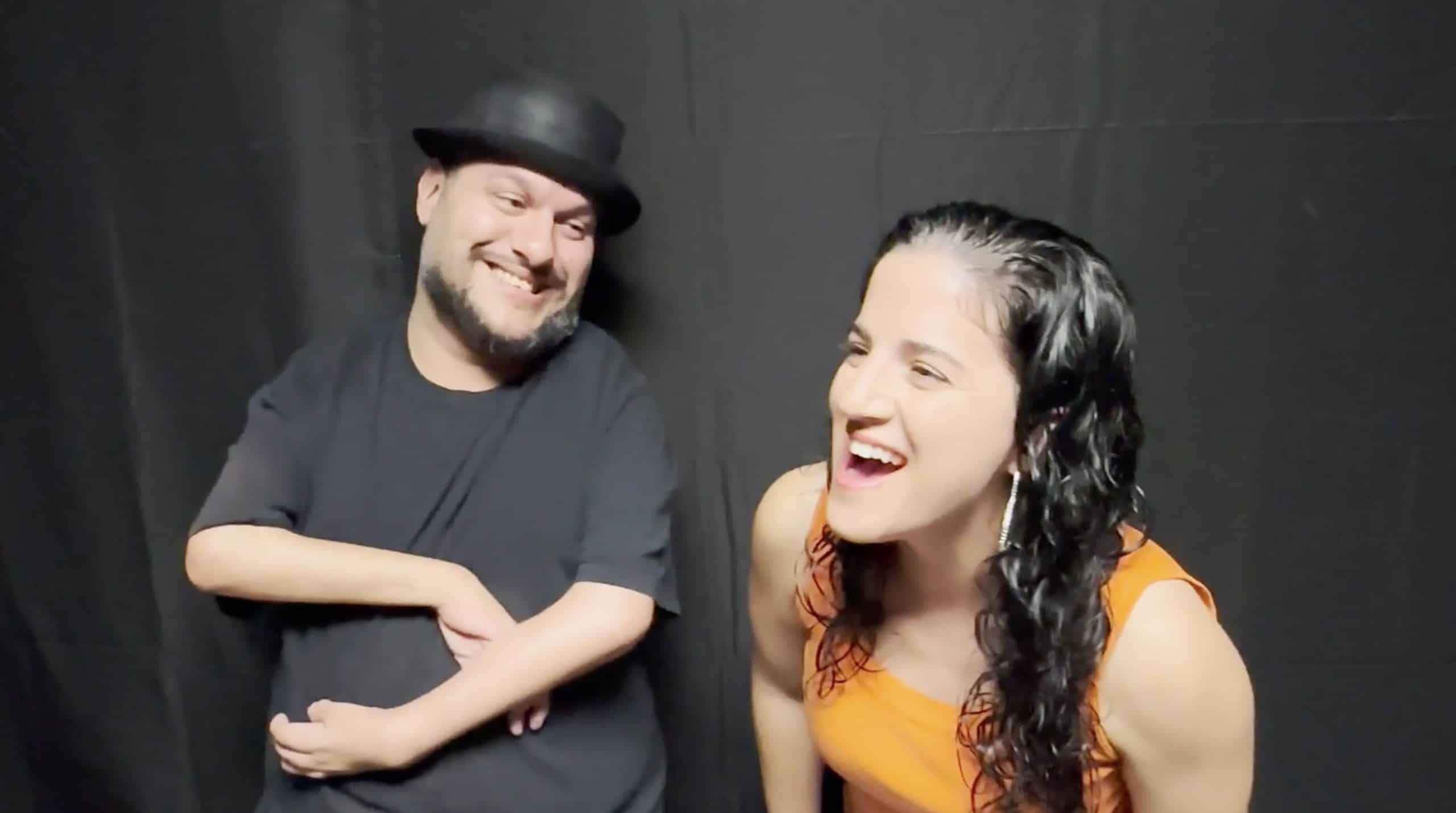
Today we have the pleasure of being joined again by Jordan, who is the tech lead at Cliff Media and who has been hanging out at the Cliff House, bringing smiles to everybody and changing the way that we are approaching building community and creating a sustainable business so that we can continue imagining inclusive, sex-positive, loving community growing in person and around the world.
Today we are continuing a conversation from last week. Last week, we had a chance to dive deep into experiences through childhood and early adolescence that shape a lot of our emotions, regardless of whether it’s about disability or other aspects of your identity. That may change your narrative about yourself, make you feel different or isolated. And sometimes hat can lead to addiction.
We also learned how critical it is to think about disability when we’re understanding the context of community. 1 in 4 people have a disability. That number should mean something, it should remind us all that this is not a conversation we can leave out.
Today we get to hear the other half of that story, the moment when Jordan began thinking about what else lies on the other side of misery. What else lies on the other side of the belief addiction is the only part of his identity? This small version of ourselves that we have conditioned ourselves to believe we must be.
That’s true whether you’re thinking about a disability or whether you’re thinking about the monogamous relationship that you hate, that you are stuck in, or the belief that you must be straight and all of those other desires you have to stuff down. But in reality, a small shift in your psychology may bring you into a whole new world.
We get the opportunity today to dive deep into Jordan’s psychology, experiences and perspectives. Thank you for joining us again.
Jordan:
Always a pleasure. I will come here any time you ask.
Vanessa:
One parallel that I see in my life, and I don’t at all want to equate this to the intense challenge of overcoming addiction, but kind of a similar psychology is that I was stuck for a while in a job where I was really miserable.
I think this is probably something that a lot of us have experienced. I was getting good pay. It had good benefits. And I hated it. I thought for sure it was important for me to be miserable. My identity was small and I was small because I felt small in that environment. Therefore, that’s who I was. I could not imagine an alternate scenario.
And then fast forward a year or two, now I’m in an environment where I feel strong and proud and happy and connected. So that misery that felt all-consuming was not far away from an entirely different experience of the world.
I’m wondering, as you went through this much more challenging process, and I say that because of the many different aspects of your life that this impacted as well as the illness – it’s so important to me to destigmatize the addiction because of its physical components as well – that you are pushing yourself somehow to move past that identity, move past that physical addiction into another life.
What happened and how did you do it?
Jordan:
I think it’s kind of a cliché story for addicts: it’s when you hit rock bottom. A common mentality for addicts is that the only way to kill the addiction is to kill the addict. That’s where the really dark path leads, where you feel like there’s no amount of group therapy or counseling that’s going to get me out of this hole that I have dug myself, or this noose that I’ve tied for myself.
So if I really want to get out of this addiction, I just have to stop existing. That’s kind of where things went. There was a situation where I purchased a whole bunch with the intention of purposely overdosing.
I did that, and it didn’t work. There were some side effects from that. It took a toll on my body. It didn’t it didn’t do what it was intended to do, but it had effects.
When I came out of that stretch of time, I felt like there’s probably a reason why that didn’t work. I took it as maybe an omen or a sign or some sort of signal from the universe, like alright, you took a shot and it didn’t work. You’re probably meant to be here for a bit longer, at least.
So I took that as the first step. I don’t want to make it sound like it was as easy as that because there was a lot of alone time. There was a lot of self-reflection, and there was a lot of looking at myself in the mirror and deciding who I wanted to be.
This is just my own experience, and I encourage people to seek out help or seek out resources. But I felt for me that the journey had to be very personal. My inner strength needed to be what pulled me out.
I value the support of other people. Just for me, at that time because, I was trying to hide the addiction a lot and I wasn’t open, shouting from the rooftops that this is who I was.
So for me, attending a session or doing that felt out of the question. I wasn’t going to go down that route. That wasn’t me. I didn’t want to do that.
I’m naturally a very deep thinker. I think a lot. I overthink, and then I rethink, and then I think I’m done thinking, I think a little bit more. So for me, it was a process. It was not a process that I predetermined, just a process that this is the circumstance today.
I am alive today, and there’s a reason why I’m alive today. What am I going to do with that life today? That’s kind of how I approached it.
Even with other things like quitting cigarettes and stuff, here’s the thing. I’m fucking stubborn Since I’ve been a little kid, I’ve been fucking stubborn. When doctors would say, hey, you can’t walk, you won’t live on your own, I live to be stubborn and to say fuck you to all those people that say I can’t do it.
That stubbornness has gotten me this far. I used that to work with my own addiction. Because I’m so stubborn in my head, I could quit cigarettes. I could do that. I just did it. I just have that ability and that stubbornness to just set my mind on the task.
And then I guess maybe there’s that project manager in me where it’s like, if I can put it down in a list or organize in a fashion where I know the end goal is sobriety and happiness, and I know that right now I’m just getting out of an attempt to end things. And so how can I get from A to Z?
I just planned out my footsteps. Step one. Step two. And process it out, which is what my brain does naturally.
So that really became important to me. I guess I just naturally, even subconsciously, treat life like a multitude of many projects. So one project is self-help and one project is physical health and one project is mental health. That’s I guess that’s just how I organize myself.
So that project was sobriety and happiness, and it was a long battle. It took a lot of personal reflection and eye on the prize mentality.
When I think at that point, when you feel like there might be something more to human existence or the human experience and that maybe, life has maybe, not in a religious way, but like there’s some sort of meaning amongst all the chaos, there is a path for all of us to lead.
I leaned into that as a positive way to go about it. I’m very much about giving back as well. Not only did I want to help myself, but I felt that once I was able to do that, I’d love to be able to help others, in any way I can under any organizational or professional aspect.
Things like this. I’m hoping that if people watch this, hopefully maybe they can relate or maybe they’ve had similar feelings or maybe just one sentence out of all of the things that I’ve been talking about, because I talk a lot, may be helpful or maybe they felt the same way.
So part of that journey and part of that healing was also that emotional connection that I get with helping others. That was also very inspiring to me. I very much want everybody in a good space. If everybody’s in a good space then we’re surrounded by people that are happy and healthy. I feel at my best and I’m surrounded by others who are happy and healthy.
Addiction and controlling addiction is an everyday struggle. I still get urges. There’s always, in the back of my mind, that little appetite for it. But it’s something that I’ve learned to control. And I know I think a lot that’s also helped is being self-aware of the triggers.
I’m very aware of some of the existing triggers, plus some that may be slightly similar to the ones I know, but could be offshoots. So I’m prepared to understand those triggers and find other ways to combat them.
Walking has been hugely helpful and that’s why I do it a lot. Secondly, it’s being around people, awesome people and people that I love and that I connect with. That makes a huge difference because isolation was part of that addiction.
If I feel like I start to get into those isolated moments, I actively try to find ways to be around people. I feel like isolation is a trigger.
Vanessa:
When you’re stubborn, you live by this and you love being around people, I think we’re cut from the same cloth.
Jordan:
Quite possibly.
Vanessa:
One thing that really stands out to me is that we all hold multiple truths at the same time, always. We can choose which truth we lift up and lean into more. But they’re always there.
You described before that your whole identity was an addict. You were doing it all the time. You were unemployed. You were at the bar and people knew you’re an addict. That was just who you were and what you did, and that’s all you were going to be.
At the same time, somehow, some part of you was saying, I’ve always been stubborn and I’m a stubborn person. You have that identity, or I’m a person who says, fuck you, I can define my life.
And somehow, at the same time that your identity was this fixed state of being an addict, you also grabbed onto the other identity that existed there to pull yourself all on your own out of that situation, into a new identity.
Jordan:
Yeah, that’s the journey I think. I think it’s a lot of evaluation and analytical and critical thinking. You can say, let me analyze data from the last ten years and process what came of it or what was accomplished from it. If you know at the end of that analysis, you’ve left yourself or the world in worse shape than it was, then that’s probably an indication that you should look at yourself in the mirror and do something different.
That was also one thing that I’d like to throw in that that held true to me is, every day I would look in the mirror and I would tell myself, do one thing differently today, even if it’s small. Eat a different brand of cereal, or take a different walk route to the weed store, or go to a different weed store, or try a different type of coffee shop.
I felt like if I could at least accomplish one different thing a day, then that meant that change was possible, doable. I can benefit from the fruits of those small changes to accumulate into being a different person.
Vanessa:
I love that. I think often when we’re setting goals for self change, it’s about disciplining yourself and almost being mean to yourself. You must exercise for 30 minutes a day or whatever. What I’m hearing, which is a beautiful call into general happiness, that changing the type of cereal is very easy, but you’re restructuring your brain to realize that you can change other bigger things. Your tomorrow can be different than today if you choose to.
Jordan:
I think that was like the mental conditioning of change. It can be this scary word like people hear “change” and like they’re getting anxious. Whoa, I’m comfortable with these socks or in these sheets. Don’t give me different socks or sheets. That’s scary.
For me, the mental conditioning of a change is not scary. It’s doable. You can observe it. Like I shaved my head, or I styled my beard differently today, and somebody complimented it. That’s cool. That change worked. I felt good about that change or maybe I bought a fancy new hat or anything that at least can give you that sense of a feeling of confidence with change. Anything that can help you embrace it, not only like feeling comfortable with it.
You start with those small changes and then once those feel comfortable, then bigger changes feel comfortable. Then one day, maybe I realize, my environment is not conducive to mental health. Okay, let’s change the environment. I’ll just pick up and move somewhere else or, whatever the case may be.
Those types of scary changes become extremely digestible and comforting, almost exciting. It’s like, wow I’m going to be living in the city, or I’m going to be a different person, or I’m going to get rid of all of my colored clothing and dress in nothing but black, because that’s just what I feel like, who I feel like being today.
I don’t have to explain to anybody. Fuck that. Why is there a duffel bag full of pink and orange t-shirts going into the garbage? Because that’s what I feel like doing.
Vanessa:
One of the other things I love about this is you talked about how you wanted a sense of meaning and purpose to better contribute to society. One of the steps that you took to get there was not pushing yourself necessarily to find your meaning and purpose or to go out and do good per se.
Rather you were allowing yourself to choose new things and choose things that made you happy, and just because that happiness filled your cup, you are now contributing so much to so many people.
I can say that because I’m one of those people to whom your presence contributes beautiful things, and I’m seeing that all around the community. You are such an outwardly happy person. Your joy contributes to the well-being of people.
But the description of the ways that you’ve got here are interesting. Buying a new hat probably doesn’t actually contribute to other people, but it contributed to you, which made you feel better.
And then that positivity, it allowed me to feel good around other people and hopefully that positivity spreads. I’m very much about energy as well. That to me is very important. I told you this phrase before, but I’m going to say it on your podcast: Happiness is indeed an emotion or a feeling, but positivity is always a choice.
So even if life throws you lemons, you can either say, fuck, I hate lemons, or you can make some lemonade.
Choosing that positivity for me, it just reminds me that it is a choice. I think a lot of people may neglect to understand that emotions are not choices, but how you react or interact with others in those emotional states is a choice.
Now that I’m comfortable with who I am, and I can look in the mirror and feel that I’m a good person, then I’m a happy person and I’m a person that others like to be around.
That makes it easy for me to be around others and to say, hey, you know, you don’t feel so comfortable right now, I’m not going to tell you how to be comfortable. I am just going to show you what comfort looks like from somebody who does feel comfortable. I try just to lead by example and just to say, I’ve been there, but now, like, I feel free as a bird and let me show you what that can look like.
And if you are inspired by that, by watching me feel free and that inspires you to feel a little bit more free, that’s fantastic. That’s kind of like the whole point.
As a side note, I never wanted to be that guy where people were like, oh, you inspire me to do this and that. I almost took it as a slight because I’m just trying to be like, Average Joe. People were inspired just because people would see me do everyday things, and I’d feel like, my life is so boring sitting here drinking a beer and say, fuck off.
But if I can just be positive and show other people that positivity and they get inspired by my intention of being inspired, not just like me living, then yeah, I’m very pleased by that. That fills my cup. I love that shit. At the end of the day, if my experience and my suffering can save somebody else from a little bit of suffering, then at least it makes me feel like some good may come out of that whole experience.
I’ve opened myself up to more experiences and more people. I’ve learned to love myself, and I’ve learned to love life, and I’ve learned to love others. I’m at a point where, now, because I’m in an emotionally good place and I’m surrounded by great people, now I can do the work to try to help others.
Vanessa:
I want to close it out with a love note to anyone who is a person with disabilities and currently, where you were in the past, really struggling with addiction. What would you offer to them?
Jordan:
I think the experience is different for everyone. What I can say is find a system that works best for you. If you don’t feel like your capacity is at a level of stubbornness to be able to stubborn yourself into sobriety, then lean on others. I encourage people to lean on me when they need me and there’s nothing wrong with that.
Everyone’s different. I would say, take a personal inventory of yourself and really get analytical and critical. Look at yourself in the mirror and tell yourself, is this the person I want to be today, tomorrow, five years from now, ten years from now? And if the answer is no, don’t be afraid to do something different.
Shave your head, paint your toenails. Buy a wig. Go on a trip. Try something new, and get comfortable with the idea of change, because that helped me tremendously.
If you can embrace change and not be afraid of it, then hopefully the transition from feeling like an addict to not feeling like an addict might be a lot easier. So, embrace it.
Love yourself, love others, and work on feeling good and comfortable in your own skin. I think that, to me, was the most important. The more I felt good about myself, the easier it was to leave the addict behind.
Thank you so much Jordan. I am excited to just flip my hair in a wig with some painted toenails. This approach to joyful change is something we can all learn from, as we’re escaping whatever pieces of misery that we are living in.
Thank you, listeners and viewers, for joining us.
This has been another edition of A Slut’s Guide to Happiness with your host, Vanessa Cliff, and our amazing guest today, Jordan.
You can find us wherever you get your podcasts, including Apple and Spotify, as well as on cliffmediaproductions.com.
Please help us out by liking and sharing this podcast, and stay tuned for more deep dives into beautiful, messy waters.
If you’re over the age of 18, you can check out our video content on our website, including this person, on cliffmediaproductions.com
And most of all, I invite you to join us in the pleasure of being awkwardly human, naked, and without pretense.
Let’s get free! Woohoo!





Materials found in this section may be sexually explicit in nature. To view materials on the site, you must affirm all of the following:
I am at least 18 years of age (21 in some localities). Any sexually explicit material I am viewing is for my own personal use and I will not expose minors to the material under any circumstances. I do not find images of nude adults, adults engaged in sex, or other sexual material to be offensive or objectionable and I desire to receive and view sexually explicit material.
The viewing, reading and downloading of sexually explicit materials does not violate the standards of my community, town, city, state or country. I am solely responsible for any false disclosures or legal ramifications of viewing, reading or downloading any material on this site.
This website and its affiliates shall not be held responsible for any legal ramifications arising from fraudulent entry into or use of this website. This warning page constitutes a legal agreement between this website and you.
All models, actresses and actors whose images appear on this site are over the age of 18. Bookmarking to a page on this site whereby this warning page and/or terms and conditions are by-passed shall constitute an implicit acceptance of the terms and conditions herein.