

A warning that this episode includes discussion of physical violence.
Although transphobia exists everywhere, it is especially difficult to survive as a transgender person in some places, from conservative parts of the U.S. and the U.S. carceral system, to conditions in many conservative countries.
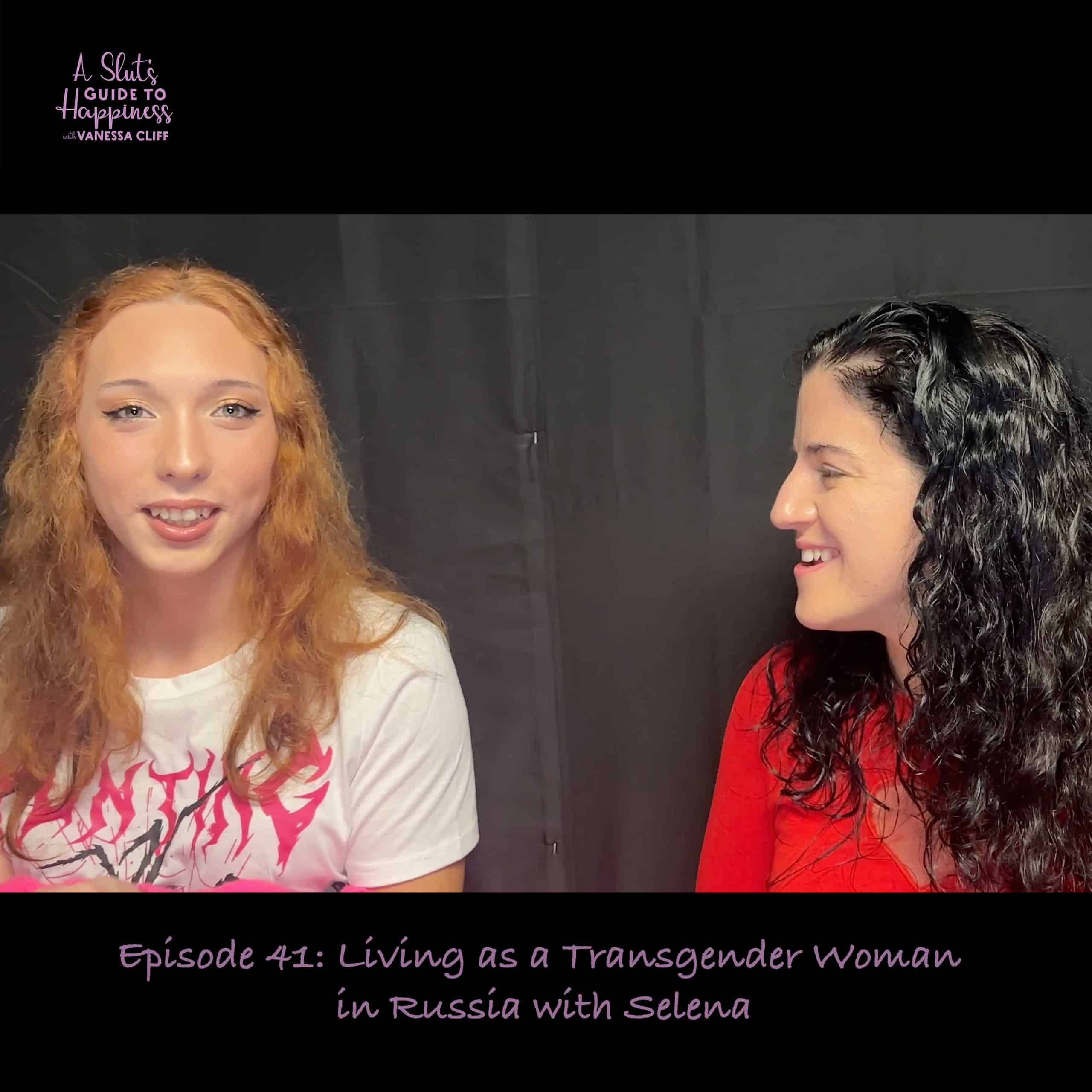
In this episode, we talk with Selena, a Russian refugee who fled transphobic violence and political persecution in her home country. She describes the bullying, assaults and intentional humiliation she experienced from her family and from her school. Nonetheless, she recounts how clearly she knew her identity from a young age and her persistence in being herself.
Despite the social and political conditions, Selena formed clandestine associations with other LGBT people in her area, meeting with curtains drawn just to share safe spaces and friendship. She and a group of friends even went on public record advocating for transgender people. Her brave actions, along with discrimination in employment, ongoing violence and other factors, led Selena to escape to the U.S.
In the words of Maya Angelou, “No one of us can be free until everybody is free.” Stories from LGBTQ folks surviving, resisting or fleeing dangerously transphobic places help us remember what it means to fight for authentic safety, happiness and freedom in community.
Welcome back to A Slut’s Guide to Happiness, where your body is perfectly imperfect and it’s safe to be as sexual or kinky queer or slutty as you want.
Today we have the incredible honor of talking with Selena. She is a friend I met through Roxie Valentine, who is our “Community Whoreganizer” at Cliff Media. She’s been hanging out at the Cliff House lately so I’ve had the opportunity to hear a little bit about her incredible story. I’m really excited to hear more on this podcast today and get to share this with you.
Selena migrated here from Russia. She is a trans woman who has bravely been out most of her life. She is going to share some of the experiences of being trans in Russia and also after migration.
We had the opportunity to talk about some people who grew up in areas of the U.S. that were pretty transphobic in parts of the U.S. But I think this is a whole other experience to learn from, to understand what it’s like to be trans in other countries. This is a fantastic learning opportunity, and I hope it also reaches some folks who are either in Russia or who are Russian immigrants here in the US who can relate to this experience as well.
Selena, thank you so much for being here and sharing your experiences.
Selena:
Thank you for inviting me.
Vanessa:
I’d like to share start with a little bit of background context. Can you tell us about where you grew up and kind of what your childhood was like, what you experienced early in life?
Selena:
I was born in a small city in Russia with about 150,000 people. The state’s name is Tatarstan, the same as Oregon in the United States. The whole population of the state was about 4 million. Then we moved to Kazan, which is a city with 2 million people.
Russia is pretty tough about LGBTQ rights, no matter where, when, and especially trans rights. When you’re a gay person or lesbian, it’s easier to be undercover, hiding. When you’re trans, you’re literally like saying about yourself in every corner because you look different, your voice is different, your body is different.
Especially with LGBTQ rights in Russia, it’s so hard to be a trans girl because you get aggression from all corners. It’s just impossible to live like that.
Vanessa:
I do want to let folks know that Selena shared with us that there may be some dark parts of this. Our podcasts have been dark before. I think it’s really important for us to be able to share the realities of hard things because it allows us to connect.
But if this doesn’t feel right for you, viewers, I want to encourage you to take care of yourself in whatever way feels good for you.
Selena, you mentioned that it can be hard to be trans in Russia. Feel free to share only what feels comfortable. Can you describe before we get into your personal experiences in general, what are some of the things that you’ve heard about being trans in Russia, things that happen to people who are transgender?
Selena:
It can be a totally different experience. You can get killed or you can get beaten for a long period of time. You can be refused medical care. You can be refused police help or judgment in court systems. Someone can do harm to you and nobody will be found responsible for it. You’ll just be by yourself. That’s just how it is.
Vanessa:
Are there any laws that protect against discrimination of people who are trans?
Selena:
We don’t have a special like LGBTQ law is the main law. The main law is everyone has the right for life to be happy and to be safe. It’s the main law. But just because of the people’s personal opinion, they just go from their own mind. If you’re kind of disgusting to them, they won’t help.
Vanessa:
So that’s the cultural idea, is that people who are trans are “disgusting”.
Selena:
Yeah, the whole LGBTQ community is perceived as disgusting. They say, we don’t want to see you, we don’t want to talk to you, we don’t want to hear about you. So you were saying it’s easier for lesbian and gay people because you can kind of hide that, pretend you’re straight. But people who are trans are more visible, and so it’s riskier that way.
Selena:
Yeah, definitely. A lot of guys have beards. They have a wife and kids. But on the side, they are having fun with guys or girls. Then how they are protecting themselves is by being part of that community. Because if you’re not part of that community, your quality of life is going to be really low.
Vanessa:
It’s really powerful that one of the things, as an LGBTQ person in Russia, is finding other LGBTQ people.
Selena:
We had LGBTQ clubs, until the new law, which says it’s an extremist organization. They closed all the gay clubs now in Russia.
Vanessa:
Now, LGBTQ organizations are considered extremist organizations and they’re not allowed. You cannot talk about it. You cannot do meetups. Every time you do that, the riots will come and just arrest you. That happened just recently, I think ten times in Moscow.
Some housing know that people are going to be there, like a New Year party or Halloween party. Just people who are LGBTQ, maybe are kissing. Then just breaking the door, getting in and arresting everyone.
Vanessa:
Wow. If you want to have friends who happen to be LGBTQ, how do you find other people? Do you secretly get together? How are people connecting with each other in spite of that?
Selena:
I think right now it’s impossible because all the apps, they don’t allow it. For example, like Tinder, all these apps, they left Russia because of the war. All we have is just Russian apps, but they don’t allow the LGBTQ relationships.
So if you’re a guy on the app, you can only search for a girl. They won’t give you an option. It’s really hard for people to just talk to each other. They used to talk before and now you don’t really get to know each other.
Vanessa:
When did this law pass?
Selena:
I think it was April.
Vanessa:
This year?
Selena:
Yeah.
Vanessa:
It’s in 2024.
Selena:
A lot of things have been changing very recently.
It was prohibited before for minors to hear about LGBTQ, even talking about LGBTQ community. It was prohibited with children, even with teenagers, if you’re not 18 now.
I think in 2020, it became the case for all citizens, no matter how old you are. Then very recently, it just became another stage, LGBTQ groups considered an extremist organization.
Vanessa:
In that context, it is incredible that you chose to be authentic about who you are in the world. Can you talk about at what point you started making that decision and why, given the challenges that you knew you were going to face?
Selena:
I felt something going different. In Russia, they would say “wrong”. But instead I say “different”, which matters to me. Something was different when I was 11.
I was watching Hannah Montana, my favorite TV show, and she was so cool. I just wanted to be like her and have a bunch of dresses, high heels and just be a star.
That’s when I started doing makeup and wearing makeup even to school. That’s when I got really bullied at 11. Yeah, they would splash water on my face.
Vanessa:
Other kids?
Selena:
Yeah. Some of my makeup would be muggy.
So that’s when it started and I was experiencing that until I went to university. But even there, it didn’t stop because our professors at university would say they could easily pick you out, ask you to stand in front of the whole audience, like 250 people and just start shaming you. There were so many cases like that.
Vanessa:
That happened to you?
Selena:
Yeah, that happened to me. I was standing there for 40 minutes just listening about why I should not should not exist.
I was a teacher. I was studying to be a teacher in Kazan Federal University. They would say, we don’t need teachers like that. You have to change your hair. You have to cut it off. Make your nails normal.
Vanessa:
That’s a lot that you went through. A lot of rejection and shame. I think it is incredible that you had the strength, despite all this rejection from friends, peers, other kids and professors, to continue being who you are. How did you do that?
Selena:
It was hard. I wouldn’t lie. But at that time, it was still okay to have LGBTQ community. We just had to be super invisible. You could not get into support groups if you don’t know anybody in the group.
We were just communicating with each other and making groups. Then along the door, close all the windows in a dark room. Then we turn on the light and start talking about what’s happening right now with our lives and support each other. It got worse over time.
Vanessa:
At what point in your life did you meet these people? How did you meet them?
Selena:
I heard about the support group from my friends, and they had friends, so it was a bunch of friends of each other. They were inviting me.
I think the person who started that, he was somehow, in politics in my state. He started building community. We had hoped to make it better.
We even had a conversation with state politicians, the youth minister. He promised us that we should be accepted. That was really great.
Vanessa:
How did you do that?
Selena:
We were afraid that it’s going to put a cross on our lives because we were going public.
Vanessa:
It’s going to be on the government website, because you spoke in a way that was on record.
Selena:
Yeah, they made a bunch of pictures. They took passports from each person. Then we talked with him and he said, LGBTQ people should have rights to live happy lives with our actions from the government. They should be safe. But that was only one case. And nothing has really changed.
Then our community got shut down five months after that.
Vanessa:
Five months after you spoke publicly?
Selena:
Yeah.
Vanessa:
How did it get shut down?
Selena:
They just made a law that you cannot talk about LGBTQ no matter how old you are. Not only minors, but now even if you’re over 18. Then it became LGBTQ groups are extremist organizations. So it’s just been getting worse.
That’s why I’m really worried about trans rights in the United States, because right now they’re blocking it for minors. I’m pretty sure it’s going to be the next step for the whole country in the US.
Vanessa:
For sure. It’s scary. It’s been attached in some ways to the anti-porn laws too, that talking about LGBTQ is considered “obscene”, which is absolutely absurd. It has nothing to do with sex to talk about gender identity.
Can you tell me what your family response was to your transition, your identity?
Selena:
My family’s super transphobic. My dad used to say that I’m a girl, but not in a good way. He would be asking me to take my pants off to show that I’m really a girl. It happened so often, he was like, why do you act like a girl? Take off your pants. Show me that you mean it.
That was a lot. That’s why I started studying in the boarding school where you have to live 24 / 7 and just go home twice or once a week. Because at home, my dad would beat me up every day.
Vanessa:
Beat you up? Physically?
Selena:
Yeah. I had many, many bruises in every picture from Kindergarten until boarding school when I started living there.
Vanessa:
In kindergarten?
Selena:
He was thinking that I was gay, I’m feminine. I’m not a real man.
Vanessa:
Did you have other caregivers, other adults in your life?
Selena:
I had my mom. She always tried to protect me. But the consequences of that, she could have her cracked because my dad would throw things at her or get in bed punching her. We both had a bunch of bruises. My mom tried to leave him several times, but she always came back.
Vanessa:
I’m so sorry that happened to you. At what age did you get away from your dad?
Selena:
When I was 14 or 13. I was still coming home Saturday till Monday, which is a day and half. And those were the worst days in my life. Summertime I had to be at home, which is three months straight. My mom passed away when I was 16.
Vanessa:
Your mom was your protector. So then you were just living with your dad alone?
Selena:
Yeah, I lived with him, but I decided to go to university. I started living in another city to be further away from him. That helped a lot.
Vanessa:
And you never felt like you could call the police or get some kind of support from the government?
Selena:
I did that. The problem is that the government doesn’t really do anything about it. We don’t have domestic violence laws. They have regular laws that you cannot hurt a person.
Vanessa:
So you would report him to the police?
Selena:
Yeah. They would take him to jail for 15 days or something, then they would just let him go. But then my mom would have more problems. He would beat her just because she called the police.
At one point, he beat me up so bad, I couldn’t walk. I told my neighbor. She called the ambulance and the police came. They talked to me, and that’s when they started a criminal case against him. As soon as that started, we were still living with my dad.
While I was in the hospital, my dad beat my mom up, and said, if you want to give your statement to the police. I’ll just kill you. To try to save her life, she told the government that his assault on me wasn’t true.
But since the government saw that it really happened and I have health problems right now, my mom had to sign an agreement that dad and mom, they don’t have any problems. Everything is good, so they could stop the criminal case.
Vanessa:
How did that feel for you?
Selena:
I was really upset because I felt like that could have been the point when everything could be changed. By then, mom had her own apartment and we could just leave there. She didn’t do that.
I think it was Stockholm Syndrome, if you know of that. They’re just getting attached to the person who is hurting them. I remember hearing about that in psychology. She loved him even though he was abusing her in really extreme ways.
Vanessa:
How did you cope with that?
Selena:
I was just leaving all the time and just trying to be on the street somewhere. I didn’t come home till ten. I just tried to stay away from home as much as I could.
Vanessa:
Do you feel like that impacted your sense of being yourself as a trans girl at the time? How did you manage to continue expressing who you are in the world in spite of this violence against you?
Selena:
I think if there wasn’t so much violence, I probably would be more confident in myself. I would have started transitioning way earlier than I did. I would be happier, I’m pretty sure about that.
It was hard. I couldn’t really be myself. I always had depression, because nobody really supports LGBTQ people in Russia. You don’t have access to the LGBTQ topics because it’s blocked for minors. You don’t know who you are or what to do.
Vanessa:
At what point in your life did you start seeing anything about trans lives, online or in movies or books?
Selena:
I think when I was 17, I first heard it, but I didn’t know what it meant to be a trans girl. I just knew that guys sometimes dress up like a girl. But she’ll always take that off. I was like, damn why are you taking that off? What’s the sense? They were just like that for a short time.
I just started searching more and more, talking with different people, using Chat Routtlette. It’s people all around the world. I would talk with them and they would tell me different types.
Vanessa:
That’s awesome that that was the space where you were able to connect with people. Were you intentionally typing in that you wanted to connect with other trans girls, or how did you do that?
Selena:
No, it would be just turning it on. Then I’m talking with different people. There were LGBTQ people sometimes, and I could talk with them about just feeling that something is different about me. They would just tell me, I think you’re trans, you just have to talk with psychologists and get treatment.
Vanessa:
Were they psychologists that you could talk to about it?
Selena:
Not when I was minor, for sure. They wouldn’t talk about that. They would just suggest you do another thing, like how about go to some sport?
Vanessa:
They would try to suggest you be more masculine?
Selena:
Yeah.
Vanessa:
Were you ever, when you were an adult, able to talk to a psychologist that actually listened to you?
Selena:
Yeah, when I was 18. The first thing I did was go to a psychologist. Russia has free healthcare.
Vanessa:
Good! That’s how it should be.
Selena.
So I talked with her, but she wasn’t supportive. After the first session, she cancelled me. She said, I don’t think I can help you with that, sorry. That’s how it ended.
And then I was talking with a psychologist from an LGBTQ center. And she was really helpful.
Vanessa:
Very cool. So this was at a time when it was possible to have an LGBTQ center and that included medical staff?
Selena:
Yeah.
Vanessa:
When you talked with her, what did she do? What kind of help did she provide?
Selena:
The LGBTQ community?
Vanessa:
The center and the psychologist, yeah.
Selena:
The first one was a government psychologist. She was really skeptical about the LGBTQ topic. She would say, I don’t think that’s normal. It’s your choice, of course. Have you tried with girls? Maybe, something went wrong during the girl’s experience. That was a government one.
Then LGBTQ center one. She was really open-minded. She would support and talk about how I’m going to reach a happy life being an LGBTQ person, transgender in Russia. She asked what kind of questions I’m having about the future.
Vanessa:
Was there anything useful that she said that impacted you about how to have a happy life there?
Selena:
She would just ask me the questions. I was searching for my own solutions by myself. At that point, I was already thinking about getting surgeries. So we got to the point when I’m just working, trying to save up some money to start transitioning.
Vanessa:
I know that some people who are trans use hormones or get surgeries and some don’t. What was important to you in terms of medical changes?
Selena:
I always wanted to have breast augmentation surgery, a smaller nose, smaller face. I want to be super tiny. I also wanted to put some implants to my thighs so I look more like a model body.
Vanessa:
Were you able to get any of those things?
Selena:
Not in Russia. The actual changes happened only in the United States.
Vanessa:
In Russia, is it not allowed?
Selena:
It was allowed. But the problem is, when you start transitioning, I could do makeup and other stuff, dressing up, but if you start transitioning and if you change and you’re an obvious transgender person, it’s just impossible for you to get a job.
So you have to think twice before you actually start doing that, because you’re basically putting a cross on your future on the career path.
Vanessa:
Did you have a job while you were in Russia?
Selena:
I had, yeah, I had my own business. I was doing an adult toys store on marketplace.
Vanessa:
Very cool.
Selena:
Yeah, that’s the only type of thing that you can do if you are trans in Russia.
Vanessa:
So you didn’t have an employer because you felt that there would be a lot of discrimination?
Selena:
Oh, they just won’t hire you. Well, it’s way easier.
Vanessa:
So you had to work for yourself in order to survive.
Selena:
Yeah.
Vanessa:
At what point did you start going by your name and your and using she / her pronouns or the equivalent in Russian.
Selena:
Since I was 19, I told my friends that I was changing everything and I’m going by she / her. Some friends, it was hard for them because they are not used to that. Nobody really do that in Russia.
My old friends, he was like 55 and that was hard for him for sure. He would still call me like “he”. Other friends are trying to do it. Sometimes they say “he”, but they do their best I think.
Vanessa:
So you did have some friends who are really trying to be respectful.
Selena:
Yeah.
Vanessa:
And are those people you’re still in contact with?
Selena:
Yeah, they are mostly gays, the guys, and one lesbian girl. I’m still talking with them because that’s the only people they know and they cannot communicate with other LGBTQ people right now.
Vanessa:
So it’s important for you to maintain those connections.
Selena:
Yeah.
Vanessa:
I imagine that then you and the hope of the way that you are out publicly in the US means a lot to them.
Selena:
Oh, yeah. They always tell me it was really the right choice to move here.
Vanessa:
So you are now an asylee in the U.S., right?
Selena:
Yeah.
Vanessa:
What was the final straw that broke the camel’s back, the final thing that happened that made you decide to migrate?
Selena:
The laws I started thinking about transgender, that you cannot get hormone therapy, surgeries. You cannot change your gender on your passport. You cannot change the picture. They just made it so bad. You would use the old picture to travel. And that would raise a lot of questions from people. Like a guy in that picture that looks like a girl here.
Vanessa:
So then it becomes difficult to travel or unsafe?
Selena:
Yeah. Especially if you’re traveling because Russia doesn’t really have friends in normal countries, I would say, in Europe or states. All our friends are Turkey, China, which are all transphobic countries. That would be just impossible for me to get there.
Vanessa:
So you made the choice to leave for the US. How did that go when you were trying to get out?
Selena:
Oh it’s really easy. You can travel whenever you want. You just need to have money and they just let you go. You just have to buy plane tickets.
Just because of sanctions, I wouldn’t be able to go straight there. I had to go in a couple countries just to avoid sanctions
Vanessa:
Because there are sanctions on migrating from Russia to the US.
Selena:
No, airplanes, they don’t really travel straight now. So for Russians, they usually always go to Turkey first and then from Turkey you can fly whenever you want.
Vanessa:
Did you have to stay for a while in Turkey or you just had a layover there?
Selena:
I just stayed there one day. Then I flew to Mexico. Then I went through the Mexican border.
Vanessa:
Were you walking or driving?
Selena:
Driving. There were other Russians too, because the war started here. The government were mobilizing people for the war. So they weren’t ready to die for Russia.
We got a car and then we went to the border and we said, we’re asking for asylum. We got detained. After two days, they let us go.
I mean, they did interviews, like “credible fear” interview. And then, after the positive answer, they just let us go.
Vanessa:
You were detained at the immigration detention center?
Selena:
Yeah.
Vanessa:
What was it like while you were there?
Selena:
It was a really good one, because we crossed in Calexico, California. There weren’t a lot of immigrants. It’s like Tijuana. Because Tijuana is the worst place if you’re crossing the border.
It wasn’t good. Because it was something I didn’t understand. The officers were pretty nice. I translated the Russians because the Russians didn’t know English.
Vanessa:
Wow, you’re helping other people who are Russian there.
Selena:
Yeah.
Vanessa:
Were they all fleeing persecution in Russia?
Selena:
Yeah. It was not much. Four people from Russia. Some of them were candidates to be mayor. And because of the corruption in Russia, they had riots in their house and had to leave.
Vanessa:
To prevent being put in prison?
Selena:
Yeah.
Vanessa:
When you were in the immigrant detention center, I imagine they didn’t tell you how long you would be there?
Selena:
Yeah, you should expect, like, right now it’s even really bad. Like, you have to sometimes wait four months and it’s way worse because we were on the border, border prison. It’s super comfortable when you compare it with actual prison or jail. So we just slept on the floor on a mattress. They had TV.
But the one they send you after that, if you don’t pass the credible fear interview or if they feel something is wrong with the case, it’s way worse. It’s a really small room, and it can be like six people in a room. Someone even sitting there and they sleep sitting or just on the floor, like you just sleep where someone else’s legs are. It’s really cold and they just give you paper to cover up.
Vanessa:
What was it like having to have that conversation about fear in Russia?
Selena:
They ask you a bunch of questions. It’s about a 40 minute interview and they ask you questions and they ask you again, but differently.
Vanessa:
To make sure you’re telling the truth?
Selena:
Yeah. They’re trying to catch you. So for example, they would ask you why did you leave Russia? And then they would ask you, what made you come to the United States. So it’s basically the same question, just like different words.
Vanessa:
Did you say that you were transgender when you did the interview?
Selena:
I was still using “queer” because there were so many Russians there. I still didn’t feel safe, to be honest. I was basically five centimeters from them. So it didn’t feel safe there.
Vanessa:
They released you, so they must have, at least on some level, believed that you had credible fear?
Selena:
Yeah, yeah. Usually for LGBTQ, it’s a really strong case because they know what’s going on, that people are getting killed in Russia.
Vanessa:
So you left the detention center now. Is it okay to say what city we’re in?
Selena:
Yeah.
Vanessa:
Okay. So now you’re in Portland. How did you get here? And what made you decide to come to the city?
Selena:
I moved to Sacramento first, and it’s a really bad city to be transgender. All my community were Russians, and they are Christians. They just shamed me and they didn’t help me.
I didn’t have the right to work yet. So I was trying to do webcam modeling and they would turn off the Wi-Fi, turn off the lights. I was just working, for example, I had a person who was watching me, telling me to do this or that, then they just turned off the Wi-Fi.
Vanessa:
Wow, it made it even harder for you to financially survive. So that’s why you decided to leave Sacramento. Then, you moved to Portland right from Sacramento?
Selena:
No, I moved to Oklahoma.
Vanessa:
Oh, I wouldn’t expect that it is a trans friendly place. Interesting.
Selena:
Yeah, because I had a partner who told me, you can live here. You can be safe. I don’t have to worry about anything. It was a great option for me at that point.
Vanessa:
And then did you leave because the relationship ended?
Selena:
Yeah. It got really bad. One day, he just pointed a gun on me. That’s what made me leave.
Vanessa:
Sorry that happened again. You’ve had a variety of experiences of violence that you’ve endured throughout your life.
Selena:
Yeah.
Vanessa:
I’m also hearing that you have done work to build community and even advocate, when you went to the government to advocate for safety for people. You have a belief, despite the things that you’ve experienced, that people, including trans women, should be safe.
You’ve had this experience with your dad of intense abuse, and then you have that experience you’re talking about with your previous partner. So you’ve had these experiences of violence. I perceive you as a really peaceful person. And you’ve been trying to help other LGBTQ people be safe.
How do you deal with those two different things going on in your mind, that you haven’t experienced safety, but you also really want that safety for yourself and other people?
Selena:
Yeah. I think if something bad should happen, it’s going to happen anyway. So we shouldn’t be afraid of it. It’s kind of hard. It’s like a conflict in my heart right now. Because I’ve been thinking that all we can do is just do the best to figure out your own problems and try to do something good for other people.
Vanessa:
So Oklahoma to Portland. Is that how you ended up here?
Selena:
Yeah. Well, Portland’s great. I think it was in the top five cities for LGBTQ people. And then, it was cheap rent. It’s a Democratic state. Yeah, so that’s three points that just made it for me. And that’s why I moved here.
Vanessa:
So moved on your own?
Selena:
Yeah.
Vanessa:
Then how did you find LGBTQ people to make friends?
Selena:
Oh, they’re all over. It’s not like Oklahoma. In Oklahoma, it’s hard to be LGBTQ, but here, you just walk and see people. My friend hosted me for one month, and then I was just walking on Mississippi Road, and there were so many LGBTQ flags.
You just start talking with a person, he or she or they would say I’m non-binary, I’m lesbian, and you’re just making connections.
Vanessa:
At what point in the U.S did you start, you said you started doing hormones, when you’re here. And when was that?
Selena:
It was in March 2023.
Vanessa:
Less than a year ago. How did you get that and what was it like for you?
Selena:
It was easy. I was already transitioned. I just wasn’t doing hormones. I used to wear women’s clothes and grow my hair.
I got into hormone therapy and to change my whole appearance even more significantly. And this my therapist has just said, yeah, it’s fine. Here is a prescription.
Vanessa:
Yay! And you’re still taking it?
Selena:
Yeah.
Vanessa:
Did it have an impact on your emotional health or other aspects of your body?
Selena:
Definitely. Your skin getting soft. And then your emotions are kind of like a roller coaster sometimes. You cry a lot. But then you’re just getting used to that, and you don’t really feel much changes.
Vanessa:
Does it feel better now that you look more like who you are?
Selena;
Yeah, definitely. I still have some appearance issues because I’m not so confident in myself, but the way I was before and the way I am now. Right now, it’s totally different people. And I’m so grateful for the United States for providing me that chance to be myself.
Vanessa:
So at this point, you’re continuing to fight your asylum case. Are you planning on staying in the U.S.?
Selena:
Yeah. I was always thinking about the U.S. as my country because I know the culture. I was watching Disney, and it’s so close for me, like every single thing that’s going on.
Vanessa:
Yeah. You grew up listening to movies in English?
Selena:
Yeah. Songs, movies, TV shows. It was the whole culture, and I was just soaking it up like a sponge.
Vanessa:
Are there any things that you miss about being in Russia?
Selena:
I don’t think so. Only my friends, I guess.
Vanessa:
Yeah. And you’re in contact with them.
Selena:
Yeah.
Vanessa:
So at the end of every podcast, I like to leave it with a love note. So in this case, I’d like to leave a love note to anyone who is, LGBTQ either in Russia or a Russian asylum here in the US. Do you speak Russian? Yeah, I do okay. I’m wondering if you would feel comfortable saying something in Russian and then in English, kind of as a message to people who are going through similar things in their lives?
[in Russian] And now I can translate in English. Just be yourself. Never think it’s an accident. If you’re gonna push it hard, definitely gonna go for it.
Vanessa:
Beautiful. Thank you Selena, this has been amazing. I appreciate the depth of the story and your incredible courage and continuing to find ways to be yourself in the world. I am amazed by your confidence. I hope that you continue to know that you are a fucking badass and also a gorgeous woman.
Selena:
Thank you so much and it was so nice to talk with you as I haven’t talked so deeply for a long time, and that really makes me more happy about myself here.
Vanessa:
I love that.
This has been another episode of A Slut’s Guide to Happiness with your host Vanessa Cliff and our incredible guest, Selena.
You can find us wherever you get your podcasts, including Apple and Spotify, as well as on Cliff Media’s website, cliffmediaproductions.com.
If you’re over the age of 18, you can also check out Clif Media’s LGBTQ-led porn content on cliffmediaproductions.com
Please help us share the message of queer-positive, slut-positive life by downloading, liking or sharing this podcast.
And most of all, I invite you to join us in the pleasure of being awkwardly human, naked and without pretense.
Let’s get free.

Materials found in this section may be sexually explicit in nature. To view materials on the site, you must affirm all of the following:
I am at least 18 years of age (21 in some localities). Any sexually explicit material I am viewing is for my own personal use and I will not expose minors to the material under any circumstances. I do not find images of nude adults, adults engaged in sex, or other sexual material to be offensive or objectionable and I desire to receive and view sexually explicit material.
The viewing, reading and downloading of sexually explicit materials does not violate the standards of my community, town, city, state or country. I am solely responsible for any false disclosures or legal ramifications of viewing, reading or downloading any material on this site.
This website and its affiliates shall not be held responsible for any legal ramifications arising from fraudulent entry into or use of this website. This warning page constitutes a legal agreement between this website and you.
All models, actresses and actors whose images appear on this site are over the age of 18. Bookmarking to a page on this site whereby this warning page and/or terms and conditions are by-passed shall constitute an implicit acceptance of the terms and conditions herein.